
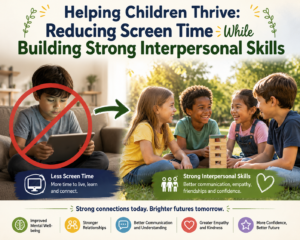
In today’s world, technology is woven into nearly every aspect of life. Smartphones, tablets, computers, and television screens have become part of daily routines for both adults and children. While technology offers valuable educational opportunities and access to information, excessive screen time for young children can affect their physical health, emotional development, and social skills. The challenge for parents is not to eliminate technology altogether, but to strike a healthy balance—allowing children to keep pace with modern life while also developing strong interpersonal skills and meaningful human connections.
Understanding the Impact of Screen Time
Young children learn best through interaction—talking, playing, exploring, and observing the world around them. When too much time is spent in front of screens, these opportunities for real-life engagement can diminish. Excessive screen time has been linked to reduced attention spans, sleep disturbances, and limited opportunities to practice communication and empathy.
Children develop interpersonal skills through everyday interactions with parents, siblings, friends, and teachers. These skills include listening, expressing emotions, cooperating with others, resolving conflicts, and understanding different perspectives. If screen time replaces face-to-face communication, children may miss valuable chances to practice these essential life skills.
Creating Healthy Technology Habits
Reducing screen time begins with setting reasonable and consistent boundaries. Parents can establish daily limits on the amount of time children spend using digital devices. Experts often recommend that younger children have limited and supervised screen exposure, ensuring that the content they consume is educational and age-appropriate.
One effective approach is to create “screen-free zones” in the home. For example, keeping dining tables, bedrooms, and family gathering spaces free from electronic devices encourages conversation and connection. Family meals without screens provide an excellent opportunity for parents and children to talk about their day, share ideas, and strengthen family bonds.
Equally important is the example parents set. Children naturally imitate adult behavior. When parents demonstrate balanced technology use—putting phones away during conversations or family time—children learn that personal interaction is more valuable than constant digital engagement.
Encouraging Real-World Activities
Children thrive when they are engaged in activities that stimulate creativity, curiosity, and social interaction. Encouraging outdoor play is one of the simplest and most effective ways to reduce screen time. Activities such as riding bicycles, playing sports, exploring nature, or simply playing in the park help children develop physical coordination while also learning teamwork and cooperation.
Creative activities also play an important role in developing interpersonal skills. Drawing, building with blocks, reading stories, and playing board games encourage imagination and problem-solving. These activities often involve collaboration with others, helping children learn patience, sharing, and communication.
Group activities are particularly valuable. Enrolling children in sports teams, music lessons, art classes, or community programs allows them to interact with peers, develop friendships, and learn how to work together toward common goals. These experiences teach children how to communicate effectively, respect others’ viewpoints, and handle both success and disappointment.
Strengthening Family Interaction
Families play the most important role in shaping children’s social and emotional development. Spending quality time together strengthens trust and communication between parents and children. Simple activities such as reading together, cooking as a family, going for walks, or sharing stories create opportunities for meaningful conversation.
Parents can also encourage children to express their thoughts and feelings openly. When children feel heard and understood, they become more confident in communicating with others. This emotional security forms the foundation for healthy relationships throughout their lives.
Family traditions and routines also help build strong interpersonal connections. Regular family gatherings, weekend outings, or shared hobbies create lasting memories and reinforce the importance of spending time together without digital distractions.
Teaching Balance in a Digital World
Technology itself is not the enemy. In fact, digital tools can be powerful resources for learning and creativity when used responsibly. The goal is to teach children how to use technology in a balanced and purposeful way.
Parents can guide children toward educational content that promotes learning and curiosity rather than passive entertainment. Watching educational programs together and discussing what children learn can turn screen time into an interactive experience. Encouraging children to create rather than simply consume—such as using technology for drawing, storytelling, or educational games—can also make digital time more productive.
Preparing Children for the Future
The world children are growing up in will continue to be shaped by technology. Therefore, the objective is not to shield them entirely from digital tools but to help them develop the emotional intelligence and interpersonal skills necessary to thrive in both digital and real-world environments.
Children who learn to balance screen time with real-life interaction grow up with stronger communication skills, empathy, and self-confidence. They become individuals who can collaborate effectively, build meaningful relationships, and navigate modern life with wisdom and resilience.
Ultimately, the most valuable gift parents can give their children is not unlimited access to technology, but the opportunity to grow within a loving, interactive, and supportive environment. When families prioritize connection, conversation, and shared experiences, children develop the interpersonal skills that will guide them throughout their lives.