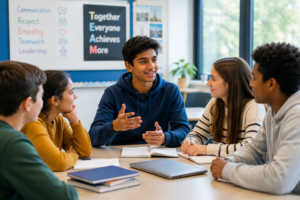

Interpersonal skills refer to the abilities that enable individuals to communicate, interact, and establish positive relationships with others. These skills encompass listening, clear verbal expression, empathy, cooperation, conflict resolution, and effective group participation. Interpersonal skills facilitate respectful and meaningful connections among individuals. Regardless of one’s degrees, credentials, and skill levels, one needs these skills to succeed in life at every level.
Interpersonal skills begin to develop in children at an early age. Through interactions with parents, siblings, teachers, and peers, children gradually acquire the ability to express themselves, understand others, and navigate social situations appropriately. These competencies serve as the foundation for healthy relationships across the lifespan and success in life.
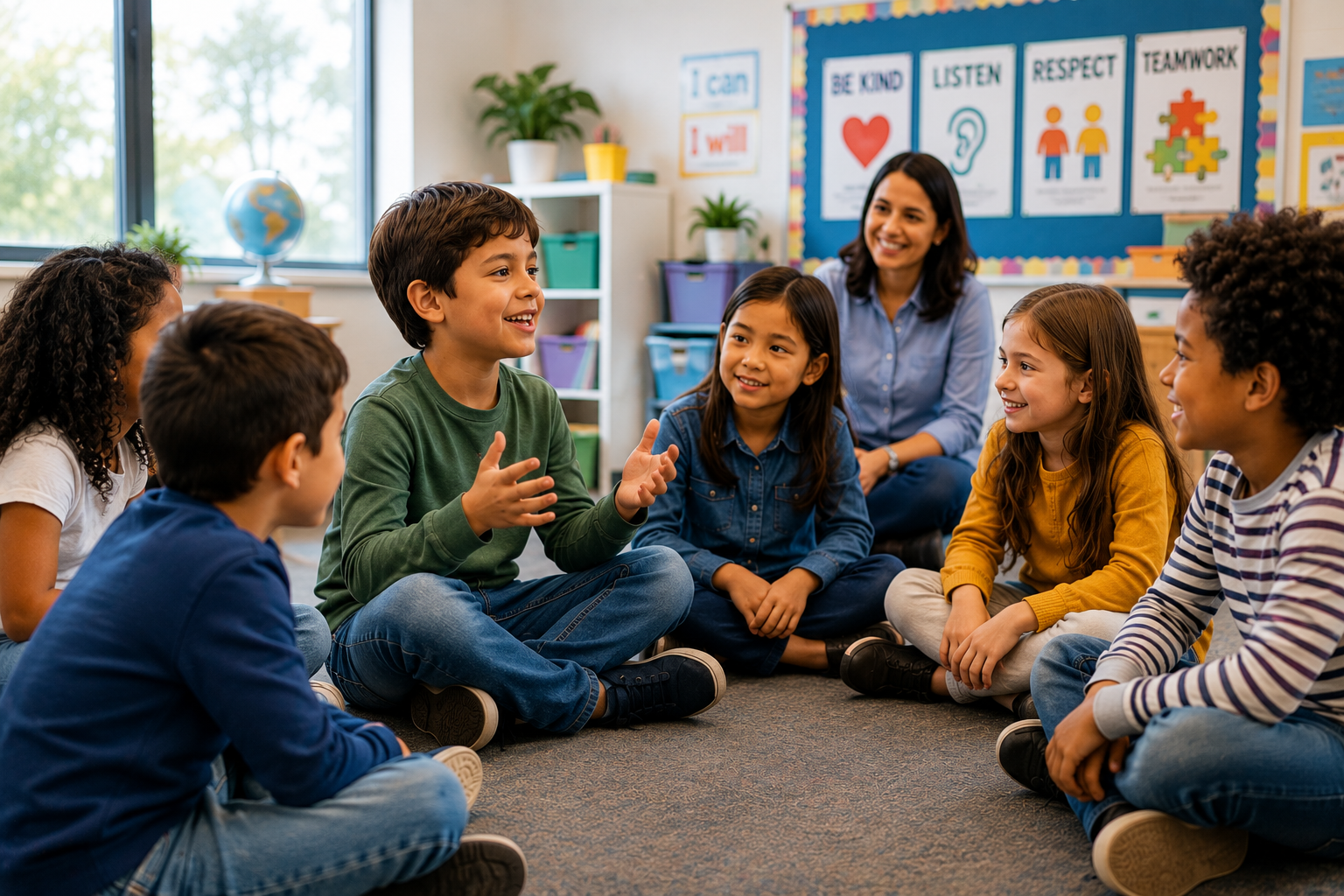
Key Components of Interpersonal Skills
-
Communication:
Children learn to express their thoughts, ideas, and emotions clearly, and to listen attentively to others.
-
Empathy:
Empathy is the ability to understand and share another person’s feelings. Children who develop empathy become kinder, more caring, and supportive of others.
-
Cooperation:
Effective teamwork involves collaboration, shared responsibility, and respect for diverse perspectives.
-
Conflict Resolution:
Disagreements are a natural part of life. Interpersonal skills help children resolve conflicts peacefully and respectfully.
-
Emotional Awareness:
When children learn to understand their own emotions and notice how others feel, they can form stronger and healthier relationships.
“A child’s personality is not shaped by what we tell them, but by what they see us do every day.”
Importance of Interpersonal Skills for Children
Interpersonal skills are fundamental to a child’s social and emotional development. Children who possess strong interpersonal abilities are more likely to form healthy friendships and demonstrate increased confidence in social contexts. Such skills facilitate effective communication, collaboration, and constructive problem-solving. A person with these abilities stands out in any gathering, and people tend to trust such a person in a leadership role.
A primary benefit of interpersonal skills is the capacity to establish meaningful relationships. Childhood friendships foster trust, shared experiences, and mutual support. These early social interactions significantly influence how individuals relate to others in adulthood. People in any organization tend to gravitate toward a person with strong interpersonal skills.
This ability also supports academic achievement. In educational settings, students frequently engage in group work, participate in discussions, and interact with both teachers and peers. Those who communicate effectively and collaborate with others typically excel in cooperative learning environments.
Additionally, strong interpersonal skills foster the development of emotional intelligence in children. Through these skills, children learn to regulate their emotions, respond appropriately to others, and manage stressful situations with patience and understanding. Such competencies are vital for personal well-being and long-term success. In any environment, people with strong interpersonal skills succeed and thrive easily.
The Role of Family and Environment
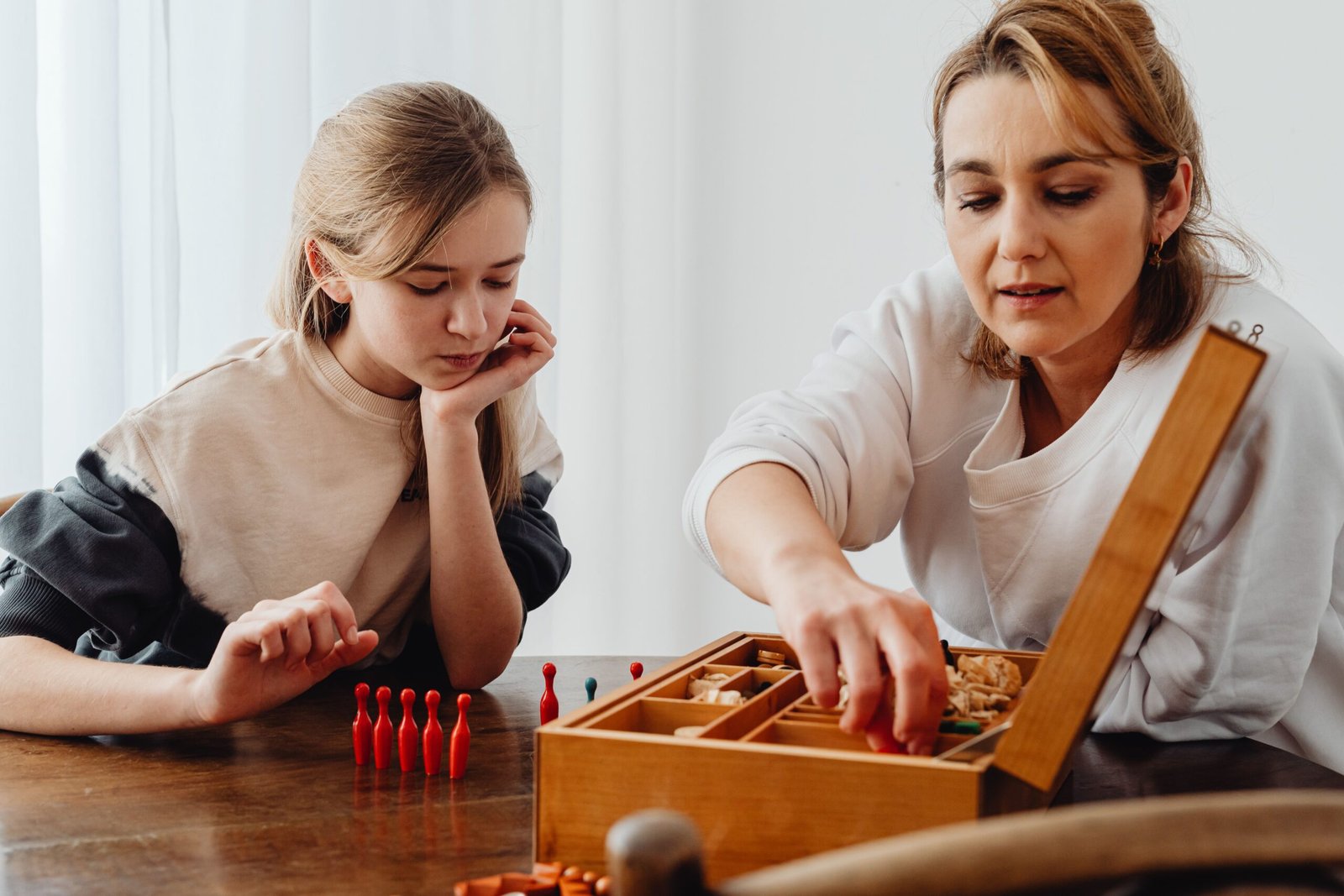
Parents and families play a vital role in teaching interpersonal skills. Children often learn by observing how adults communicate and treat others. When parents model kindness, respect, and open communication, children are more likely to adopt those behaviors. Frequent interaction and regular discussions at home among the family members develop these skills organically in children as they grow up.
Encouraging children to participate in group activities such as sports, arts, and community events can strengthen their interpersonal skills. These experiences let children interact with peers, learn teamwork, and build confidence in social situations.
Preparing Children for the Future
In today’s interconnected world, interpersonal skills are crucial for success. While academic and technical abilities matter, effective communication and relationship-building are equally important for success in school, careers, and personal life.
When parents and educators nurture strong interpersonal skills in children, they help prepare them to become compassionate, confident, and socially responsible individuals. These skills support academic and professional success and foster meaningful relationships throughout life, making a person stand out in any environment.
“The greatest gift we can give a child is not success, but the character to achieve it with integrity.”