
Winning feels wonderful, but losing is an inevitable part of life. Whether it is a football match, a spelling competition, a board game, or a school election, every child will eventually experience disappointment. While parents naturally celebrate their children’s victories, one of the greatest life lessons they can teach is how to lose with dignity and grace.
Children who learn to accept defeat calmly develop emotional resilience, humility, and perseverance. They discover that success is not defined by always coming first but by how they respond when things do not go their way.
Why Losing Matters
Every meaningful achievement involves setbacks. Athletes lose competitions before becoming champions. Inventors experience failures before making discoveries. Entrepreneurs face rejection before building successful businesses.
When children understand that losing is part of learning, they become less afraid of failure and more willing to try new challenges. Instead of seeing defeat as the end of the journey, they begin to view it as an opportunity for growth.
Set the Right Example
Children learn far more from what they observe than from what they are told.
If parents react angrily after losing a game, blame others for failure, or constantly make excuses, children often imitate those behaviours. On the other hand, when adults congratulate the winner, smile despite disappointment, and focus on learning from the experience, children begin to understand what true sportsmanship looks like.
Your example teaches lessons that words alone cannot.
Children who are praised only for winning may begin to believe that their value depends on success. This can make every defeat feel like a personal failure.

Praise Effort, Not Just Results
Children who are praised only for winning may begin to believe that their value depends on success. This can make every defeat feel like a personal failure.
Instead, acknowledge qualities such as determination, preparation, honesty, teamwork, and persistence. A child who hears, “You worked hard and never gave up,” learns that character matters more than trophies.
This mindset builds confidence that lasts far beyond childhood.
Help Children Manage Their Emotions
Disappointment is natural. Feeling sad after losing does not mean a child is weak.
Allow children to express their feelings without criticism. Listen patiently, acknowledge their disappointment, and then help them reflect on what they learned. Once emotions settle, encourage them to identify one or two ways they can improve next time.
This teaches emotional regulation rather than emotional suppression.
Celebrate the Winner
One of the clearest signs of maturity is the ability to sincerely congratulate someone else’s success.
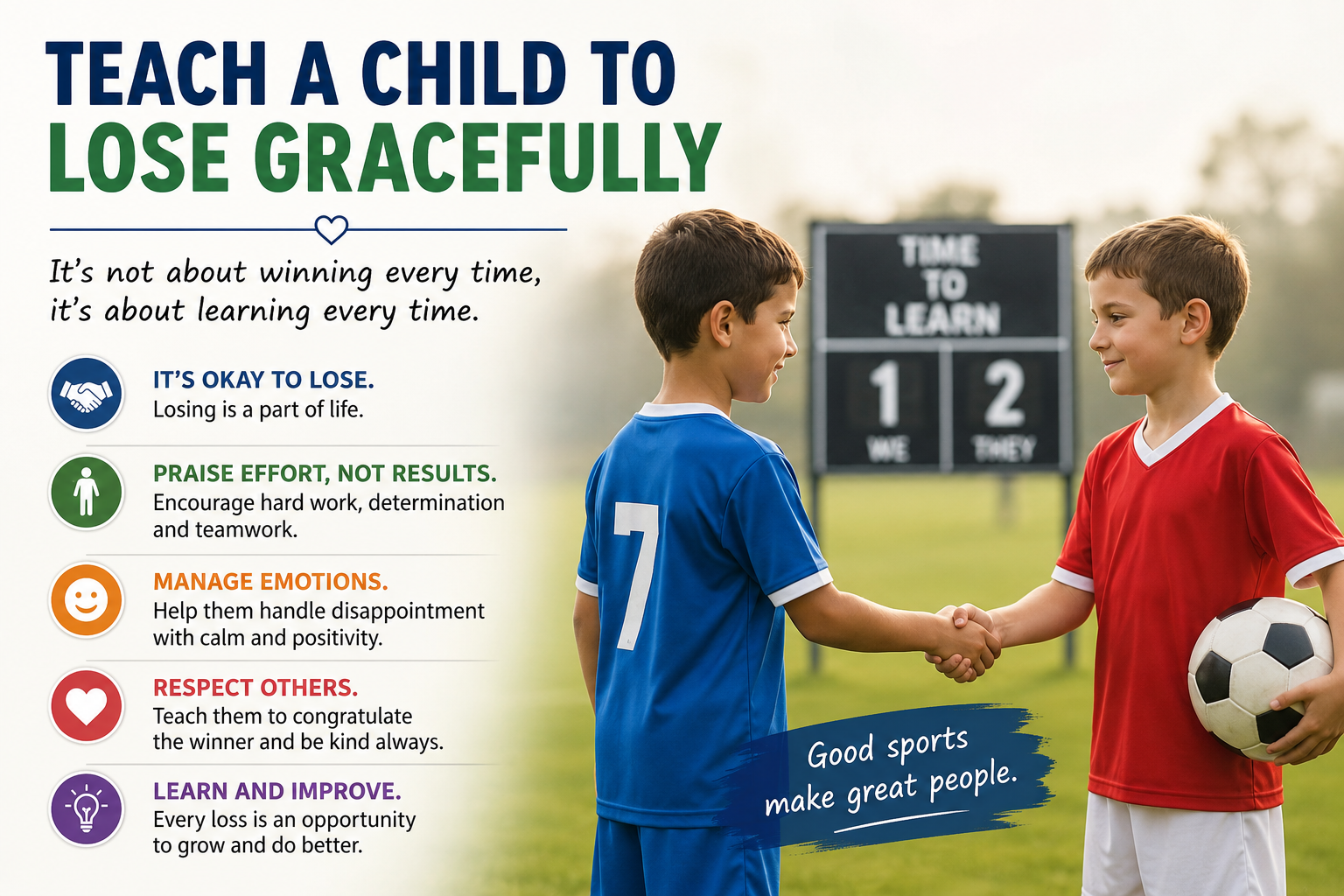
Teach children to shake hands, offer congratulations, and appreciate the effort of others. They should understand that another person’s victory does not diminish their own worth or potential.
Learning to celebrate others builds respect, empathy, and lasting friendships.
Keep Perspective
Remind children that one competition does not define who they are. A single loss cannot erase their abilities, talents, or future opportunities.
Encourage them to ask, “What can I learn from this?” rather than, “Why did I lose?”
That simple shift transforms defeat into motivation.
Conclusion
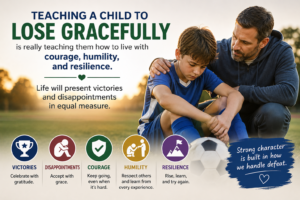
Teaching a child to lose gracefully is really teaching them how to live with courage, humility, and resilience. Life will present victories and disappointments in equal measure. Children who learn to face both with dignity become adults who persevere through setbacks, respect others, and continue striving for excellence.
In the end, graceful losers often become the strongest winners, because they understand that true success is measured not by the number of victories they collect, but by the character they build along the way.
Teaching a child to lose gracefully is really teaching them how to live with courage, humility, and resilience. Life will present victories and disappointments in equal measures.