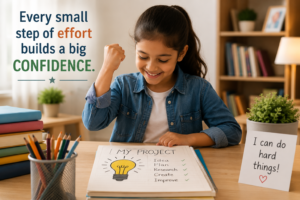


Every successful athlete, artist, scientist, and leader has experienced setbacks.
Confidence is one of the greatest gifts parents, grandparents, and teachers can help a child develop. It is not about believing that a child is better than everyone else. Instead, confidence is the quiet belief that, regardless of the challenge, “I can learn, I can improve, and I can keep trying.” This inner assurance enables children to face difficulties with courage, recover from setbacks, and pursue their goals with determination.
How Confidence Develops Over Time
Confidence is not something children are born with. It develops gradually through everyday experiences, encouragement, and opportunities to make decisions, solve problems, and learn from both success and failure. Every positive experience adds another brick to the foundation of a child’s self-belief. When adults consistently encourage children to persevere, they help them develop the resilience needed to face future challenges with confidence.
Encourage Independence Through Everyday Tasks
One of the most effective ways to build confidence is by allowing children to do things for themselves. Parents naturally want to protect their children from disappointment or frustration, but solving every problem for them can unintentionally send the message that they are not capable. Instead, offer guidance while allowing them to work through challenges independently. Whether tying their own shoelaces, completing a school project, or resolving a disagreement with a friend, each accomplishment strengthens their confidence.
Praise Effort, Not Just Achievement
Praise plays a vital role, but it should be sincere and focused on effort rather than natural talent. Instead of saying, “You’re so smart,” try saying, “I’m proud of how patiently you worked through that problem.” This teaches children that persistence, practice, and determination are more important than being naturally gifted. They begin to understand that improvement is always possible through effort, which motivates them to keep learning.
Build Confidence Through Responsibility
Giving children age-appropriate responsibilities is another excellent way to nurture confidence. Simple tasks such as making their bed, helping prepare meals, organizing their school bag, or caring for a family pet give them a sense of purpose and accomplishment. When children realize that others trust them with meaningful responsibilities, they begin to trust themselves. Responsibility also teaches accountability and develops a strong work ethic that benefits them throughout life.
Help Children Discover Their Strengths
Encouraging children to explore different interests contributes greatly to healthy self-confidence. Sports, music, reading, art, public speaking, science projects, or community service all provide opportunities to discover hidden talents and develop new skills. Not every child will excel at everything, and that is perfectly acceptable. The goal is not perfection but growth, curiosity, and the willingness to try something new.
Confidence is not built through constant praise or by shielding children from every difficulty. It is developed through love, encouragement, responsibility, and the freedom to learn from both success and failure.

Teach Children That Failure Is Part of Learning
Every successful athlete, artist, scientist, and leader has experienced setbacks. Rather than criticizing mistakes, parents should help children reflect on what they learned and how they can improve next time. Children who understand that failure is temporary become more resilient, adaptable, and confident because they view setbacks as opportunities to grow rather than reasons to quit.
Create an Environment of Unconditional Love
Confidence flourishes in an environment of unconditional love and acceptance. Children should know that they are valued for who they are, not solely for their grades, trophies, or achievements. When they feel secure in the love and support of their family, they become more willing to take healthy risks, express their ideas, and believe in their abilities.
Raising Children Who Believe in Themselves
Developing confidence is a lifelong process that begins in childhood. It grows through encouragement, responsibility, perseverance, and genuine support. A confident child is more likely to embrace opportunities, build meaningful relationships, and face life’s inevitable challenges with optimism and resilience. By helping children believe in themselves today, parents and educators prepare them to become capable, compassionate, and confident adults who are ready to contribute positively to society.
Last Word
Confidence is not built through constant praise or by shielding children from every difficulty. It is developed through love, encouragement, responsibility, and the freedom to learn from both success and failure. Every challenge a child overcomes, every decision they make, and every lesson they learn adds another layer to their confidence.
As parents, grandparents, and educators, our role is not to clear every obstacle from a child’s path but to equip them with the courage and skills to overcome those obstacles themselves. When children believe in their own abilities, they become more willing to explore, persevere, and grow into responsible, compassionate, and resilient adults.
The confidence we nurture today becomes the character they carry into tomorrow. By investing time, patience, and trust in our children, we give them a gift that will serve them throughout their lives.
“A confident child is not one who never falls, but one who learns to rise after every fall, believing they are capable of taking the next step.”