
The Gift That Cannot Be Replaced
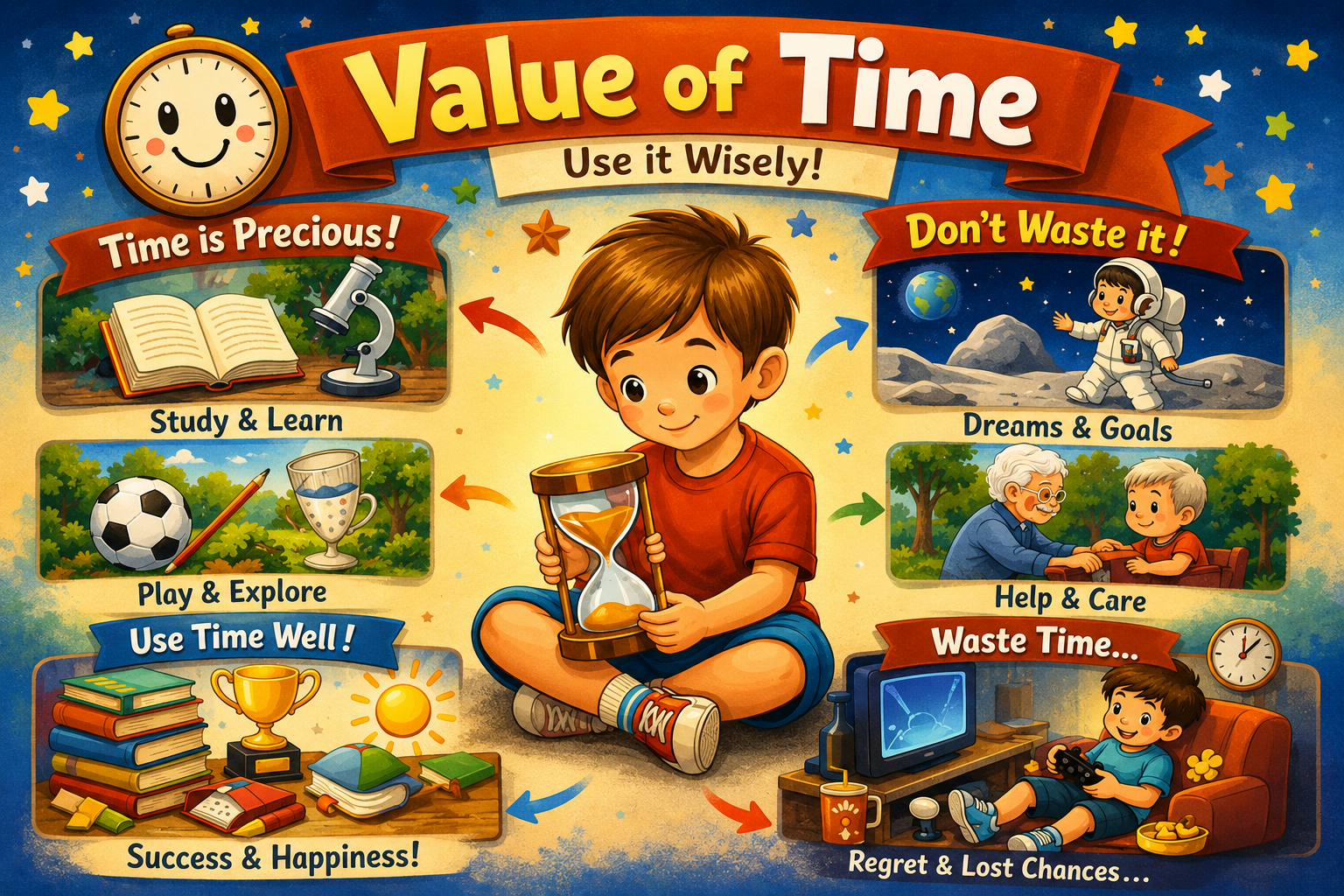
Of all the lessons parents teach their children, one of the most valuable is understanding the importance of time. Money can be earned again. Possessions can be replaced. Mistakes can often be corrected. Time, however, is different. Once a moment has passed, it is gone forever.
Children naturally live in the present. To them, an hour can feel endless and tomorrow seems far away. Yet the habits they develop in childhood often shape the way they approach opportunities, responsibilities, and relationships throughout their lives. Teaching a child to value time is not about making them rush through life. It is about helping them understand that time is a precious resource that should be used wisely and appreciated fully.
Why Time Matters
Every achievement in life is built on how we use our time.
A student who studies consistently gains knowledge over the years. An athlete improves through countless hours of practice. Friendships grow through time spent together. Families become stronger when they make time for one another.
When children learn that their choices today affect their future tomorrow, they begin to understand the connection between time and success. More importantly, they learn that time is not simply something to be spent—it is something to be invested.
Lead by Example
Children learn more from what they observe than from what they are told.
If parents constantly procrastinate, rush at the last minute, or spend excessive hours scrolling through phones, children notice. On the other hand, when they see adults planning their day, keeping commitments, and making time for family, they learn that time deserves respect.
A parent who arrives on time, follows through on promises, and balances work with family activities teaches powerful lessons without saying a word.
Help Children Understand Consequences
One of the best ways to teach the value of time is to allow children to experience the consequences of how they use it.
A child who postpones homework until the last minute may feel stressed before a deadline. A child who practices a musical instrument regularly will see steady improvement.
Rather than rescuing children from every consequence, parents can help them reflect on the results of their choices.
Ask questions such as:
- What happened because you waited until the last minute?
- How did planning ahead help you?
- What would you do differently next time?
These conversations help children connect actions with outcomes.
“Teach a child the value of time, and you teach them the value of life itself. Every moment invested wisely becomes a stepping stone toward their future.” — R. Suleman
Teach Planning Skills Early
Even young children can learn basic time management.
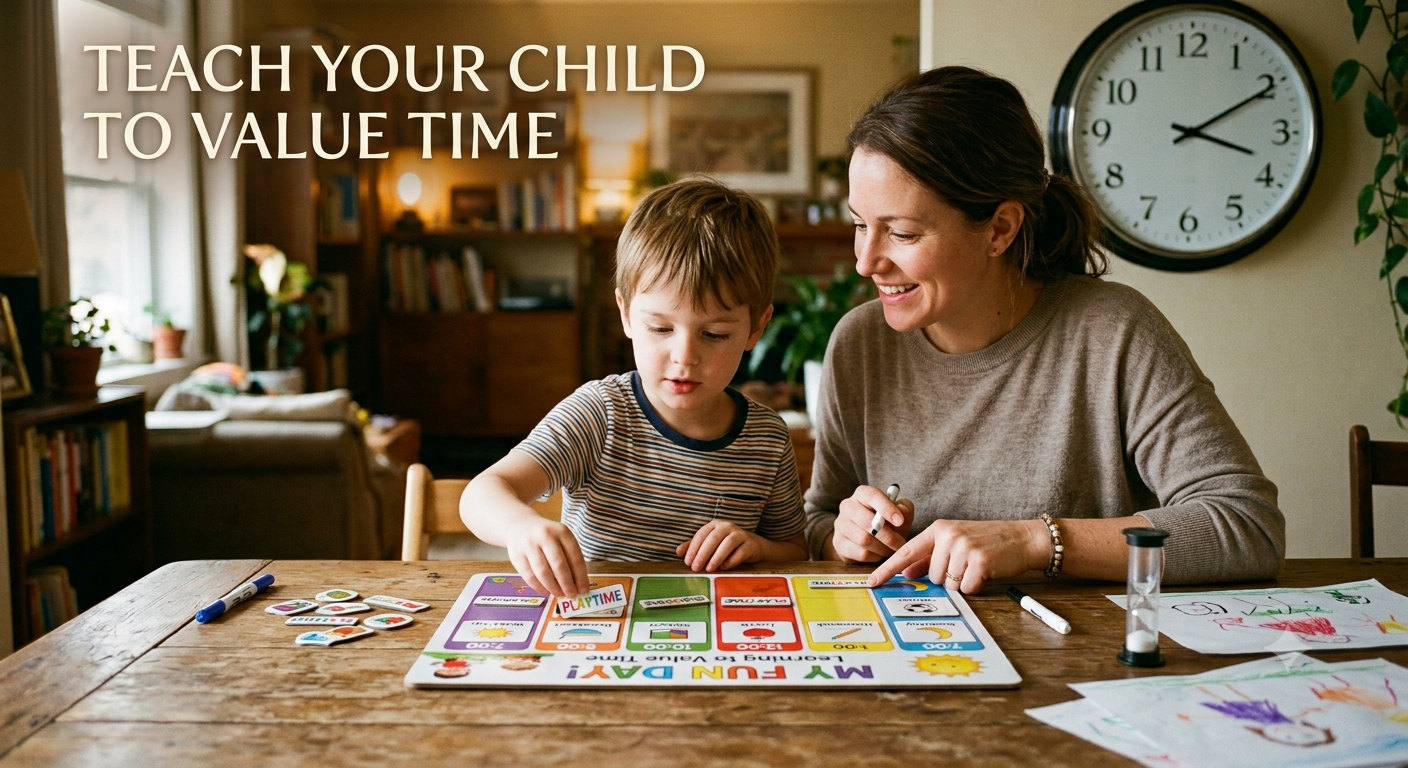
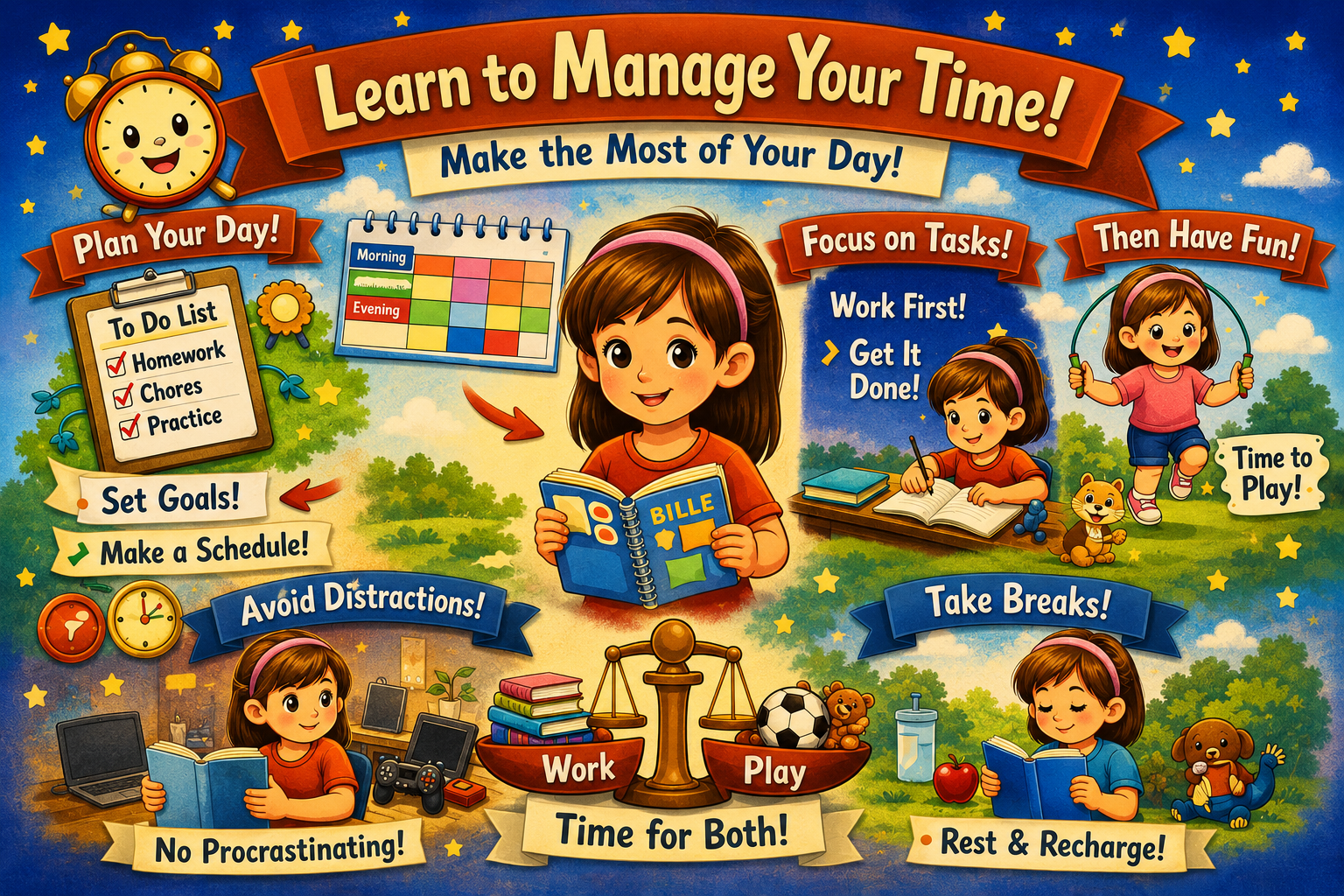
Simple tools such as calendars, daily schedules, checklists, and planners can help children organize their activities. Encourage them to break larger tasks into smaller steps and set reasonable goals.
For example, instead of saying, “Finish your project,” help them create a plan:
- Research today.
- Create an outline tomorrow.
- Complete the first draft the following day.
- Review and improve it before submission.
This teaches them that large accomplishments are often the result of many small efforts over time.
Balance Productivity and Enjoyment
To value time does not mean filling every minute with work.
Children also need unstructured play, family activities, hobbies, and rest. These moments are not wasted time; they are essential for creativity, emotional health, and personal growth.
The goal is not to create a child who is constantly busy. The goal is to help a child make intentional choices about how they spend their time.
A balanced child understands when it is time to work, when it is time to play, and when it is time to simply enjoy the people, they love.
Teach the Value of Waiting
Modern life often provides instant gratification. Entertainment, information, and communication are available with a few taps on a screen.
As a result, many children struggle with patience.
Teaching a child to wait for rewards helps them appreciate time and develop self-discipline. Saving money for a desired purchase, working steadily toward a goal, or practicing a skill over months teaches that meaningful achievements rarely happen overnight.
Patience helps children understand that worthwhile things often require both effort and time.
Use Family Time Wisely
Children learn the value of time most clearly through relationships.
A family dinner, a bedtime conversation, a weekend outing, or simply sitting together without distractions teaches children that people are more important than schedules.
Years later, children may forget many toys and gifts they received, but they often remember the moments spent with parents, grandparents, siblings, and friends.
These shared experiences demonstrate one of life’s greatest truths: the best use of time is often investing it in the people we love.
Teaching Time in the Digital Age
Today’s children face distractions previous generations never encountered. Smartphones, social media, gaming platforms, and endless online content compete constantly for their attention.
Parents should not simply restrict technology; they should teach children to use it wisely.
Help them understand the difference between using technology as a tool and allowing it to consume hours without purpose. Encourage screen-free periods, outdoor activities, reading, creative hobbies, and face-to-face conversations.
When children learn to control their time rather than allowing technology to control it, they gain a skill that will benefit them throughout life.
Final Thoughts
Teaching a child to value time is ultimately about teaching responsibility, discipline, gratitude, and purpose. It is helping them recognize that every day offers opportunities that will never come again in exactly the same way.
The child who learns to respect time develops habits that support success, strong relationships, and personal fulfillment. More importantly, they learn to appreciate life’s moments instead of letting them slip away unnoticed.
Time is life’s most precious gift. When parents teach children to value it, they give them a lesson that will serve them long after childhood has passed.
“A balanced child understands when it is time to work, when it is time to play, and when it is time to simply enjoy the people, they love.”